
Mateo Rojas
Editorial byline
Mateo Rojas is an editorial byline for Science and Exploration, with a focus on Deep Frontiers, Earth & Environment. Biographical credentials and external profiles are published only after verification.
Learn more about our editorial process and use of automation in our AI & Automation disclosure.
Coverage Areas
Latest Articles
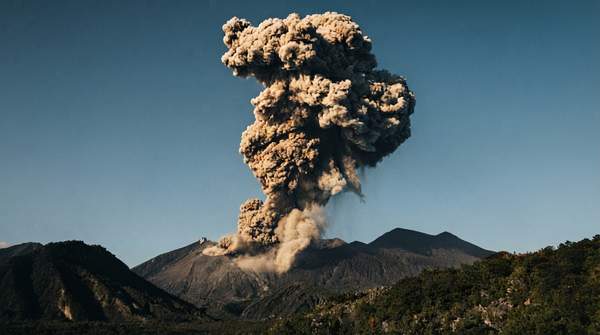
How Volcanic Eruptions Cool the Planet: The Sulfur Pathway from Eruption Column to Global Temperature Drop
Large explosive volcanic eruptions cool the planet by injecting sulfur dioxide into the stratosphere, where it transforms into reflective sulfuric acid aerosols. This stratospheric haze scatters sunlight, causing measurable global cooling for years, a stark contrast to long-term warming from human CO2 emissions.
Oct 29, 2026 · 5 min read
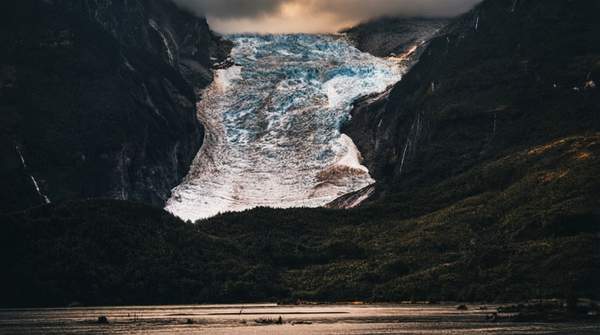
Climate tipping points: how a small push can lock in a permanent shift
Climate tipping points are critical thresholds in Earth systems where a small push can trigger self-reinforcing, irreversible changes. Understanding these points and their potential cascading effects is crucial for recognizing the urgency of climate action.
Oct 29, 2026 · 6 min read
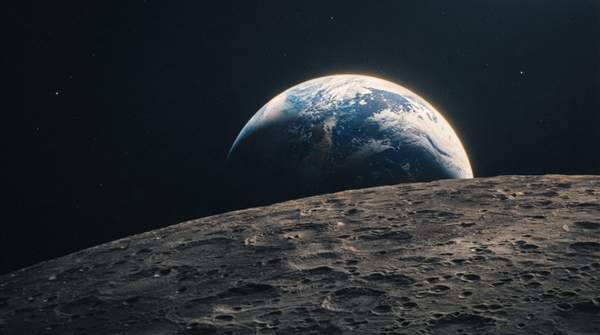
Why Ice Ages Keep Time With the Sky: The Three Milankovitch Cycles Explained
Earth's ice ages are paced by three slow astronomical cycles known as Milankovitch cycles, which alter solar radiation reaching the planet and explain the rhythm of glacial and interglacial periods by influencing Northern Hemisphere summer temperatures.
Oct 23, 2026 · 5 min read
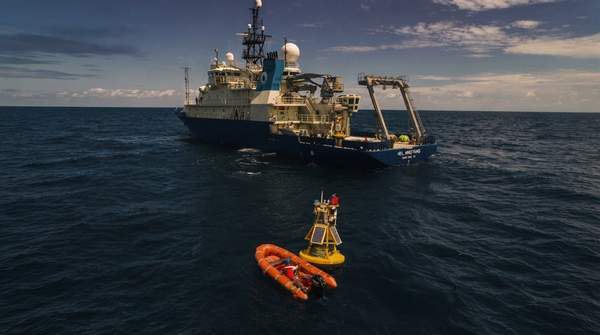
Satellites, Drones, and Buoys: How Scientists Track Ocean Acidification Across Three Very Different Scales
Scientists monitor ocean acidification by integrating data from satellites, drones, and in-situ instruments, each offering unique scales and insights to build a comprehensive global picture of changing ocean chemistry.
Oct 23, 2026 · 5 min read
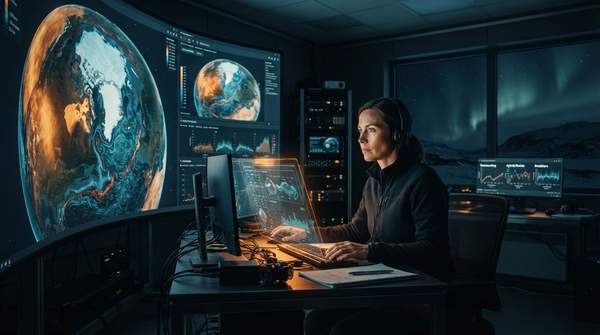
Three Ways AI Is Rewiring Climate Prediction: Downscaling, Hybrids, and Emulators
Artificial intelligence is transforming climate prediction through three key methods: downscaling coarse global model outputs to local detail, integrating AI into physics-based hybrid models, and using AI as fast emulators for complex simulations. Each approach addresses different bottlenecks in climate science, offering enhanced resolution, physical consistency, or computational speed, but also comes with specific limitations and challenges.
Oct 21, 2026 · 6 min read

From Sensors to Forecasts: How AI-Powered Digital Twins Turn Environmental Data into Prediction
AI-powered digital twins are revolutionizing environmental science, shifting focus from passive monitoring to proactive prediction. By integrating real-time data, advanced models, and AI, these virtual counterparts enable researchers to test interventions and anticipate risks before decisions are made in the physical world.
Oct 20, 2026 · 5 min read
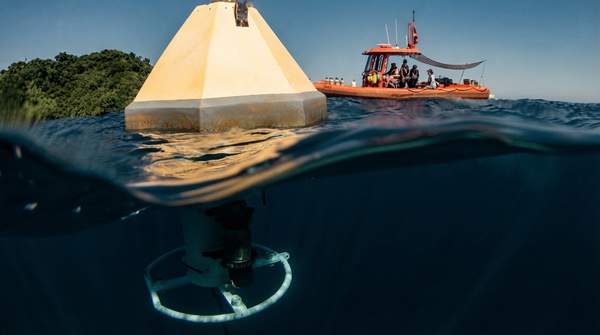
Buoys, Ships, or Satellites? Matching the Monitoring Method to the Ocean Acidification Question
Monitoring ocean acidification involves a trade-off between temporal and spatial resolution, with moored buoys offering continuous local data, ship-based sampling providing broad regional coverage, and satellites enabling large-scale remote observation. The optimal method or combination of methods depends on the specific research or management question being addressed.
Oct 19, 2026 · 6 min read
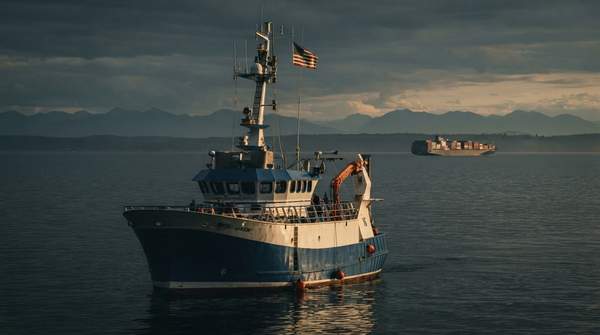
New Nature Study Reveals Unexpected Risks, Complicating Ocean Alkalinity Climate Solution
A new Nature study reveals that ocean alkalinity enhancement (OAE), a proposed climate solution for CO2 removal, faces unexpected challenges. Research indicates natural oceanic processes can reduce OAE's efficiency and that it may negatively impact marine life, complicating its deployment.
Oct 6, 2026 · 4 min read
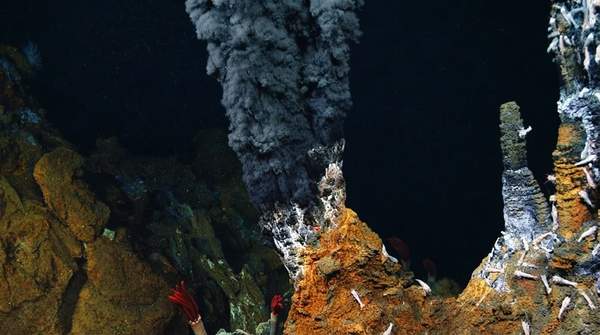
Deep-Sea Vents: A Blueprint for Life Beyond Earth
Deep-sea hydrothermal vents host unique ecosystems powered by Earth's internal heat and chemosynthesis, redefining our understanding of life. These sunless environments serve as a primary model for how life might exist on other ocean worlds and potentially where life on Earth began.
Oct 4, 2026 · 4 min read
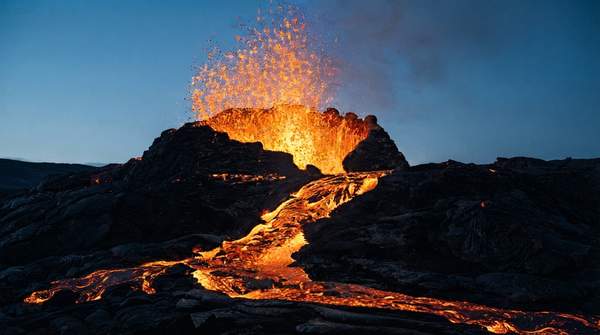
Understanding Volcanic Activity: Plate Tectonics, Eruption Styles, and Hazard Monitoring
Volcanic activity is driven by plate tectonics and hot spots, influencing eruption styles and hazards like ashfall and pyroclastic flows. Scientists monitor seismic activity, ground deformation, gas emissions, and hydrologic changes to assess risks and ensure public safety.
Oct 2, 2026 · 5 min read
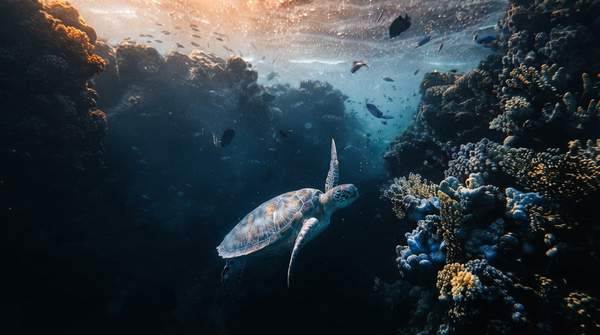
Spanish Underwater Cave Offers Lifeline to Corals Amid Warming Seas
An underwater cave in Spain, Cova de la Vaca, is identified as a critical microrefugium, offering a sanctuary for white gorgonian corals against warming seas and marine heatwaves. The stable, cooler conditions within the cave significantly reduce coral mortality and preserve reproductive capacity, highlighting its importance for conservation.
Oct 1, 2026 · 4 min read

Evolutionary Leap to Human Consciousness: What Everyone Gets Wrong
The very definition of consciousness, and which creatures we deem worthy of moral consideration, is being fundamentally reshaped by new insights into subcortical brain functions.
Sep 9, 2026 · 2 min read

Global warming: UN 1.5C climate target now unattainable
The Earth is now about 1.44°C warmer than it was in the pre-industrial era (1850-1900), according to the UN.
Sep 2, 2026 · 4 min read

What Are Deep-Sea Chemosynthetic Ecosystems and Why Do They Matter?
At temperatures exceeding 100°C, where water should boil, specialized Archaea like Pyrolobus fumarii not only survive but thrive, with an optimal growth temperature of 106°C, according to ScienceDirec
Aug 27, 2026 · 4 min read

What is Permafrost Thaw in Arctic Riverbeds and its Climate Implications?
More than one-third of the Arctic-boreal region, a vast expanse once revered as a critical carbon sink, has now transitioned into a net source of carbon, actively pumping greenhouse gases into the atm
Aug 23, 2026 · 5 min read

Eocene Forests Faced Warming Like Ours, Offering Climate Change Lessons
In Wyoming's Bighorn Basin, fossil records reveal that during an ancient global warming event 56 million years ago, forests lost a staggering 60% of their canopy, according to The Guardian .
Aug 14, 2026 · 7 min read

Subglacial Lakes and Aquifers Now Serve as Climate Observatories
Beneath two miles of Antarctic ice, a recently sampled subglacial lake, isolated for millions of years, revealed a thriving, ancient ecosystem.
Aug 3, 2026 · 3 min read

Underwater drone discovers resilient coral reef off West Africa
More than 175 feet beneath the waves off the coast of Benin, West Africa, a coral reef once considered dead for six decades has been rediscovered, alive and thriving.
Jul 21, 2026 · 4 min read

What Was the Impact of Controlled Fire on Early Human Evolution?
At the Barnham site in Suffolk, UK, archaeologists have unearthed definitive evidence of early humans creating and controlling fire, pushing back the known date of this transformative technology by ap
Jul 14, 2026 · 8 min read

'Logan's Run': A Dystopian Sci-Fi Classic
Released in 1976, the $9 million sci-fi epic 'Logan's Run' launched with nearly $3 million in its opening week, while simultaneously saving an estimated $3 million by filming in Dallas's striking mode
Jun 28, 2026 · 3 min read