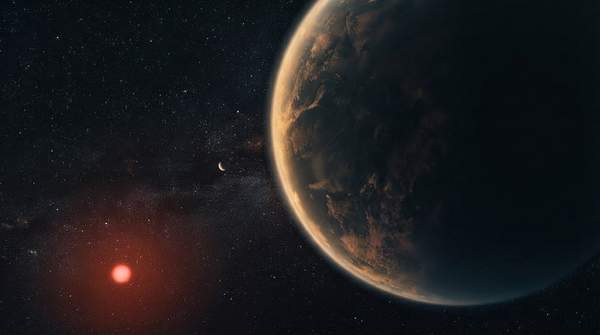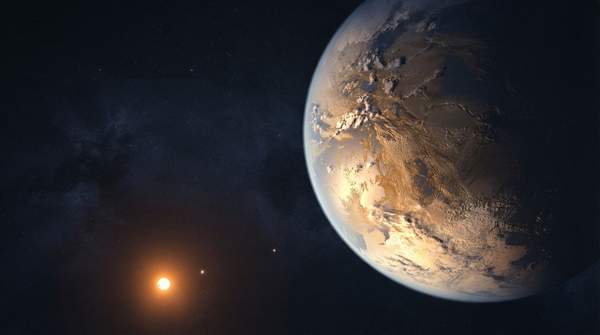
When astronomers announce the discovery of a "potentially habitable" exoplanet, the phrase almost always refers to one thing: the planet orbits within its star's habitable zone, the region where surface temperatures could allow liquid water to exist. But that single criterion is only the opening gate in a longer sequence of tests. As NASA's Sellers Exoplanet Environments Collaboration puts it, researchers are learning that even planets in the habitable zone may not be habitable, because a host star's flares and high-energy radiation can strip a planet's atmosphere entirely, leaving a world that is warm but completely airless.
Habitability, as scientists now frame it, is the ability of a planet to sustain conditions conducive to life as encountered on Earth. A widely cited synthesis of the field—drawing on reviews by Cockell and colleagues, Meadows and Barnes, and Madhusudhan—identifies a core set of requirements: the presence of liquid water, a source of energy, several bioessential elements, and appropriate thermodynamic conditions. What follows is a step-by-step framework for how researchers actually work through these interdependent factors, and why so many worlds that pass the first test fail the later ones.
Step 1: The Habitable Zone and Liquid Water
The habitable zone is defined as the region around a star where a planet can have surface temperatures consistent with the presence of liquid water. All known life requires liquid water, so this surface-temperature requirement is treated as a natural starting point. But the habitable zone is not a fixed band: small stars, with their lower luminosity, have habitable zones much closer in than Sun-like stars do, as MIT planetary scientist Sara Seager's research pages explain.
The definition also depends on the planet itself, not just its distance. The European Space Agency describes the habitable zone as the region where the energy from the star and the greenhouse effect from the planet's atmosphere could together be "just right" for liquid water. A planet with a thin atmosphere has its climate dominated by the external energy input of its star, so its surface temperature is largely a function of orbital distance. A planet with a thick greenhouse atmosphere can hold warmth at distances where a bare rock would freeze. In other words, the habitable zone is a probabilistic screen, not a certificate of habitability.
Step 2: Stellar Stability and Planetary Protection
The second test concerns the star itself. An exoplanet's potential habitability is influenced by the light and energy its star gives off, and not all stellar output is benign. NASA's SEEC researchers note that planets orbiting stars producing high levels of X-ray and ultraviolet flux from flares and activity could end up stripped of their atmospheres. A planet can sit at a perfectly comfortable orbital distance and still be rendered uninhabitable by its own star.
This is where the atmosphere becomes decisive rather than incidental. An atmosphere regulates surface temperature through the greenhouse effect, and molecules such as water vapour, methane and carbon dioxide are what keep Earth's surface warm enough for liquid water, according to the University of Cambridge's Hycean Worlds research group. Too close to the star and the oceans can boil away; too far and they freeze. The atmosphere is thus both a thermostat and a shield, and its presence depends on the balance between the planet's own properties and the radiation it endures. A failure at this stage—no atmosphere, or a star too violent—makes every later question moot.
Step 3: Bioessential Elements and Thermodynamic Conditions
Beyond energy and water, a planet must contain the chemical building blocks of life. The Cambridge habitability synthesis lists the essential requirements as liquid water, an energy source, several bioessential elements, and appropriate thermodynamic conditions—temperature and pressure regimes under which the chemistry of life can actually proceed. These elements are fundamental to the formation of the complex organic molecules that biological processes require.
Thermodynamic conditions also explain why some researchers have widened the search beyond Earth-like worlds. Hycean worlds, as defined by the Cambridge group, are planets with planet-wide oceans beneath hydrogen-dominated atmospheres, where temperatures and pressures may resemble those known to be conducive for life in Earth's oceans. Because hydrogen is an excellent greenhouse gas, the habitable zone for such worlds is governed by different physics than for Earth-like planets. The broader lesson from the National Academies' exoplanet strategy work, as summarized in a recent terminology framework posted on arXiv, is that a more complete understanding of a planet's intrinsic properties—its mass, its geological processes, and its host star's activity—is ultimately necessary to say whether a planet can be habitable at all.
Exoplanet Habitability Assessment Framework
The framework below sequences the major habitability factors in the order researchers typically weigh them, from foundational to most nuanced. Its logic is hierarchical: a failure at an early stage makes later factors irrelevant. A planet with no atmosphere cannot benefit from a favorable atmospheric composition; a planet orbiting a flare-star may lose that atmosphere regardless of its orbital distance.
| Step | Factor | Key Requirement | Why It Matters | Qualification |
|---|---|---|---|---|
| 1 | Orbital location | Orbit within the habitable zone, where surface temperatures permit liquid water | Liquid water is a requirement for life as we know it | Foundational but not sufficient; the zone's boundaries depend on the atmosphere and star |
| 2 | Stellar stability | A host star with stable energy output and without excessive flare activity | High X-ray and UV flux can strip a planet's atmosphere | A warm but airless planet is uninhabitable regardless of distance |
| 3 | Atmospheric presence | An atmosphere with greenhouse molecules such as water vapour, methane and carbon dioxide | Regulates surface temperature and enables liquid water | Composition is critical; too close and oceans boil away, too far and they freeze |
| 4 | Bioessential elements | Availability of chemical building blocks for life | Required for complex organic molecules and biological processes | Must be paired with appropriate thermodynamic conditions |
| 5 | Biosignatures | Detection of gases such as CO₂, methane or dimethyl sulfide in the atmosphere | Can indicate biological activity | Most can also arise abiotically; false positives are a central problem |
Readers can apply this sequence to any habitability claim in the news. If an announcement rests only on step 1—an orbital distance within the habitable zone—it establishes a candidate, not a habitable world. Each subsequent step narrows the field, and the final step is the hardest of all.
The Ultimate Challenge: Identifying Biosignatures
Finding a genuinely habitable planet is not the same as finding life. Astronomers are now focusing efforts on detecting life-related gases in exoplanet atmospheres. Carbon dioxide and methane can be produced through biological processes, but not necessarily so, as the European Southern Observatory's outreach blog explains. Dimethyl sulfide is thought by some to be produced exclusively by living organisms—though not everyone agrees it can be considered a reliable biosignature.
This is the field's key unresolved problem: how does one confidently prove that a given spectral signature is not caused by non-biological processes? A formal framework for assessing exoplanet biosignatures, published in the astrobiology literature, addresses this directly by acknowledging "false positives" in which abiotic sources mimic biosignatures. Its approach is Bayesian: prior knowledge of all the factors that influence habitability, combined with previous observations, gives a prior probability of life on a potentially habititable exoplanet, and new data are weighted against that prior. The result is a posterior probability of life given the observations and context—not a simple yes-or-no verdict. Future facilities, such as ESO's upcoming Extremely Large Telescope, promise richer data for this exobiology research.
Assessing the True Potential for Life Beyond Earth
When evaluating claims of "potentially habitable" exoplanets, readers should move beyond the simple habitable zone concept and consider the full range of astrophysical and geological factors—stellar stability, atmospheric properties, and the presence of bioessential elements—before treating any biosignature detection as evidence of life. The habitable zone answers only whether liquid water is possible; the remaining steps determine whether it is plausible, sustained, and chemically productive.
The measurable indicator to watch is the scientific community's ongoing refinement of habitability criteria and its development of new methods for distinguishing true biosignatures from abiotic false positives. With roughly 6,000 confirmed exoplanets and more arriving, that refinement—visible in statistical habitability assessments, interdisciplinary frameworks, and Bayesian biosignature analysis—is what will convert today's cautious "potentially habitable" labels into defensible conclusions about life beyond Earth.
Sources
- Sellers Exoplanet Environments Collaboration (SEEC)
- Habitability - Hycean Worlds
- Exoplanets: Habitable Planets — saraseager
- Life on exoplanets? — ESA
- A Terminology and Quantitative Framework for Assessing the Habitability of Solar System and Extraterrestrial Worlds — ARXIV
- ESOblog: Hope or despair: is any exoplanet really habitable?
- Exoplanet Biosignatures: A Framework for Their Assessment - PMC
- Frontiers | Habitable exoplanet - a statistical search for life