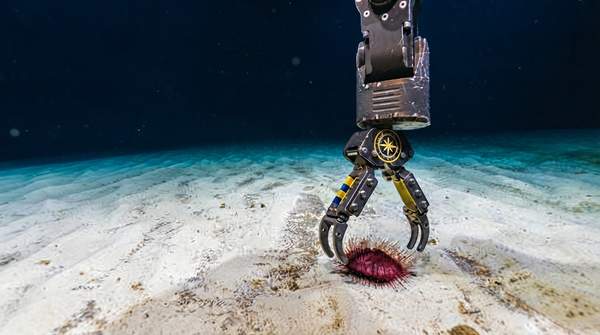
Choosing a deep-sea biological sampling tool comes down to one central trade-off: how easily you can capture the animal versus how intact it arrives at the surface. Robotic manipulator arms and suction samplers give pilots direct, versatile control, but they bring specimens up at atmospheric pressure, which can destroy the very physiology a researcher set out to study. Pressure-retaining samplers solve that problem by keeping organisms at native hydrostatic pressure during ascent, at the cost of far more specialized engineering. Here is how the three tool classes compare, and when each is the right choice.
Introduction to Deep-Sea Biological Sampling
The deep sea begins at roughly 1,000 meters, and it is not a marginal habitat: a review of deep-sea sampling technology notes that these waters cover 88% of the world's seawater-covered area and constitute 75% of the ocean's total volume. The same review emphasizes that specialized methods are needed in specific situations to ensure the accuracy of subsequent analysis, because the environment itself shapes what a sample means once it reaches a laboratory.
That framing matters for biologists in particular. Hydrostatic pressure influences the physiology of deep-sea organisms, and decompression during recovery can deleteriously affect cellular viability, according to the review. A specimen that looks "collected" may, at the cellular level, already be ruined. This is why the field has developed tools along two axes: deployment platform (pilot-controlled ROV versus autonomous systems) and preservation condition (atmospheric versus isobaric).