
Genetics
7 articles

Ice-Free Corridor or Pacific Coast? Why the First Americans May Have Come by Boat
The traditional Ice-Free Corridor theory for the first Americans is challenged by new evidence suggesting a Coastal Migration route by boat was viable much earlier. Archaeological, geological, and genetic data now strongly support people arriving south of the ice sheets before the inland passage opened.
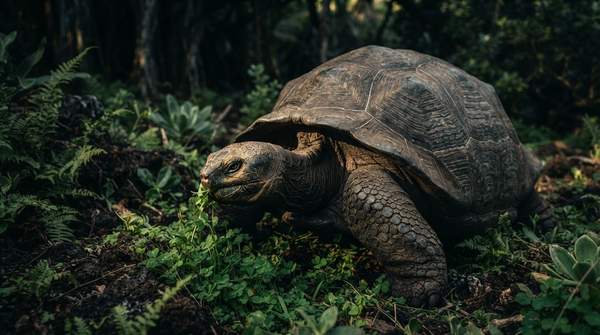
Genetic Secrets of 194-Year-Old Tortoise Jonathan Reveal Clues to Longevity
A genetic analysis of Jonathan, the world's oldest land animal, reveals a unique biological strategy behind his extreme longevity. Researchers found specialized gene variants for cellular repair and stable epigenetic control preserving youthful gene expression, offering clues to aging.

High-altitude adaptation reveals surprising human population genetic origins
In the remote Andes, a small indigenous community carries a genetic variant for high-altitude survival, a legacy of their ancestors' migration, which now offers a unique blueprint for human adaptation

Scientists Expand Genetic Alphabet From 4 to 8 Letters
E. coli RNA polymerase, the core enzyme of bacterial gene expression, accurately transcribes a synthetic eight-letter DNA alphabet, effectively doubling life's fundamental information capacity, accord

What Are the Ethical Considerations of De-Extinction?
In 2003, a team of scientists embarked on a monumental task.

Neanderthal-Human Interactions: The Love Story Everyone Gets Wrong
An ancient jawbone recovered from Peştera cu Oase, a Romanian cave, revealed a human individual whose genetic makeup indicated a Neanderthal ancestor as recent as four to six generations prior, offeri

Rakhigarhi yields three ancient skeletons for DNA analysis
Three complete human skeletons, nearly 5,000 years old, have been transferred to a Kolkata laboratory, setting the stage for DNA analysis and facial reconstruction that could redefine India's ancient