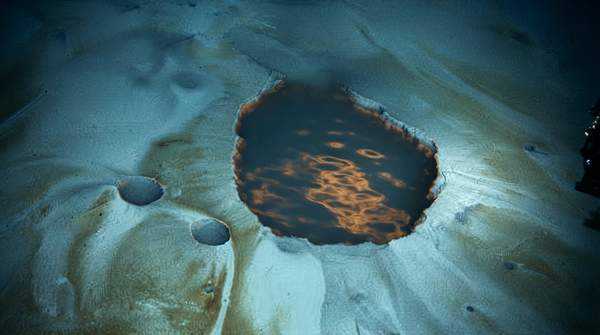
Deep-sea brine pools are lakes of hypersaline water sitting on the ocean floor, so dense that they refuse to mix with the sea around them. They form when salt leaches from deposits beneath the seafloor, saturating water until it becomes heavier than seawater and pools in seafloor depressions. The result is one of the most extreme habitable environments on Earth—anoxic, acidic, and several times saltier than the surrounding ocean—yet their edges host intense oases of microbial and animal life sustained not by sunlight but by chemosynthesis.
Introduction to Deep-Sea Brine Pools
When I first try to picture a brine pool, I find the strangeness of the image is the point. Deep on the ocean's floor, there exist lakes of salty brine, formed from salt seeping out of deposits underlying the seafloor, saturating the water to such an extent that it refuses to mix with the surrounding sea, as the Deep Ocean Education Project explains. The salinity is so great that it is toxic to most sea life. Yet these are not dead zones.
Researchers with OceanX, surveying the Gulf of Aqaba at the northern end of the Red Sea, describe the moment their submersible lights illuminated a milky, rippling boundary across a seafloor depression—the unmistakable surface of a brine lake, complete with its own waves and shoreline. Once formed, these environments become, in OceanX's phrase, "an entirely separate world hidden only a few miles beneath us."