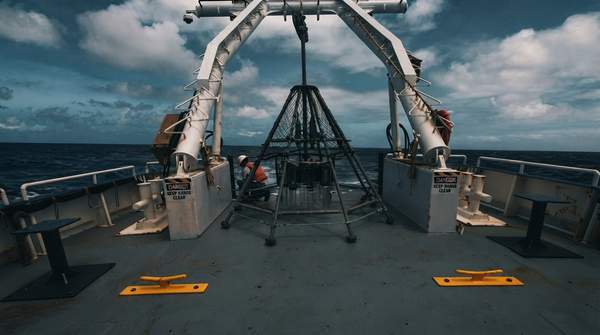
A healthy deep-sea ecosystem is best understood not by a single number, but by what it still has and what it has escaped: rich and diverse communities, complex physical habitat, abundant predators, and the absence of the specific human pressures—bottom trawling, pollution, noise, and emerging mining—that strip those features away. Scientists led by marine ecologist Alan Friedlander recently documented exactly such a system at the remote Bikar and Bokak atolls in the Marshall Islands, offering a rare living baseline against which damaged deep-sea environments can be measured.
Defining the Deep Sea and Its Health
The deep sea, as defined in a 2021 review of deep-sea biodiversity published in Frontiers in Marine Science by Eva Paulus, encompasses the water and seabed below 200 meters. It is a vast, dim world whose diversity is threatened by human impact in ways that mirror shallow waters. The review is blunt about the trajectory: overfishing, plastic pollution, and changes in ocean chemistry driven by climate change are reaching even the most remote corners of the ocean, and future endeavors such as deep-sea mineral extraction must be considered a major threat to the environment.
Crucially, the review notes that it remains uncertain whether the deep sea is resilient to these disturbances, because such resilience is difficult to research on short timescales. That uncertainty is why pristine reference sites matter so much. Without intact examples, scientists have no way to know what a degraded system has actually lost—or whether recovery is even possible.