
Earth & Environment
Investigating our planet's complex systems, from climate change and geology to biodiversity and conservation efforts.

EPA Permits Deep-Ocean Carbon Sequestration Research for Carboniferous
On March 27, 2026, the U.
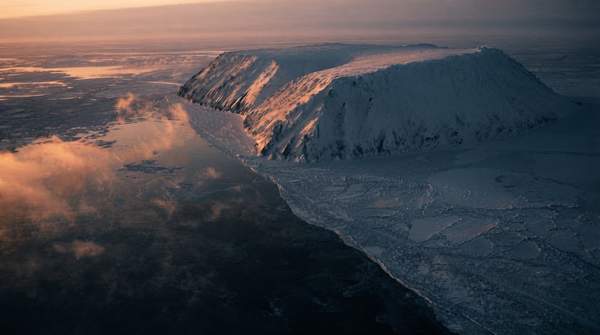
How Thawing Permafrost Creates a Climate Feedback Loop
Rising global temperatures are thawing Arctic permafrost, releasing vast stores of ancient organic carbon as greenhouse gases like CO2 and methane. This process creates a self-reinforcing feedback loop, where released gases cause further warming, leading to more permafrost thaw and accelerated climate change.

Curiosity Rover drives across varied terrain, revealing geological clues
After Curiosity's 35-meter trek to what orbital images suggested was a smooth landing zone, the rover instead unveiled a tapestry of polygons, veins, and laminations, mere centimeters across.

Curiosity Rover analyzes Martian bands during Sols 4920-4926
During Sols 4920-4926, NASA's Curiosity Rover faced a brutal stretch of Mount Sharp.

Forum Explores Consciousness in Non-Human Entities in 2026
At the upcoming 2026 International Forum on Consciousness, researchers will confront a profound truth: the very tools we use to investigate the mind are inherently biased.

Models predict JWST will detect exoplanets with diesel smog
Imagine a world half the mass of Jupiter, orbiting a dim K-dwarf star, its atmosphere thick with the same sooty hydrocarbons found in diesel exhaust on Earth.

Curiosity rover drills 'Campo Marte,' completing 47th sample on Mars
NASA's Curiosity rover recently zapped its laser for the 1 millionth time on Mars, a testament to its decade-long, relentless pursuit of Martian secrets.

Astronomers find longest period young transiting exoplanets
Around a star barely 15 million years old, two newly discovered exoplanets trace orbits of 225 and 314 days.

Anthropocene's Earth Impact Endures Despite Epoch Rejection
In a binding vote, 88% of the Anthropocene Working Group's experts favored formally recognizing a new human-defined geological epoch.

Arctic warming sprouts knee-high jungles, threatening ancient ecosystems.
In 2025, sub-Arctic Fennoscandia endured a record three-week heatwave, with temperatures near and within the Arctic Circle soaring past 30°C, a stark warning from the World Meteorological Organization

Biscayne Bay Ecosystems Face Intensifying Threats Despite Seagrass Recovery
In a bay increasingly defined by rising temperatures and acidity, Biscayne Bay's overall condition surprisingly improved from "poor" to "fair" in its 2026 Report Card, according to CBS News , even as

Environmental amnesia is erasing our connection to nature, threatening conservation efforts.
In Abu Dhabi, the International Union for Conservation of Nature (IUCN) congress is set to vote on a proposal to ban genetically modified wildlife, a decision that could shape the future of biodiversi

5 Practical Ways Grounded Environmental Helps Property Developers Manage Soil Contamination
For property developers, transforming a brownfield site into a valuable asset presents both immense opportunity and significant risk. The challenge of managing soil contamination is a critical hurdle that requires expert…

No, the Anthropocene Is Not a Formal Epoch — Here's How Geologists Decided
The Anthropocene has been formally rejected as a geological epoch by international geological bodies. This decision highlights the rigorous stratigraphic criteria required for defining Earth's timeline, emphasizing evidence detectable in rock strata millions of years into the future.

From Data Maps to Virtual Floods: Two Paths in Climate Visualization
The article explores two distinct approaches to climate change visualization: interactive data portals for analytical exploration of projections and immersive narrative experiences using AR/VR to foster emotional engagement and inspire action.

How Scientists Predict Coral Bleaching With Degree Heating Weeks
Scientists predict coral bleaching events using Degree Heating Weeks (DHW), a metric from NOAA's Coral Reef Watch that measures accumulated ocean heat stress. This early-warning system helps conservation managers anticipate threats and implement proactive protection for vulnerable reefs.