Ancient DNA analysis lets researchers read ecosystems that no living observer has ever seen, but the technique only delivers when the source material and the sequencing approach match the ecological question. A researcher hoping to track plant community shifts around a Siberian lake needs a different design than one probing the gut microbes of a long-dead animal. The evidence supports a clear decision logic: sediments and archaeological remains supply the DNA, while metabarcoding and shotgun metagenomics determine what kind of ecological picture emerges from it.
Primary Sources of Ancient DNA
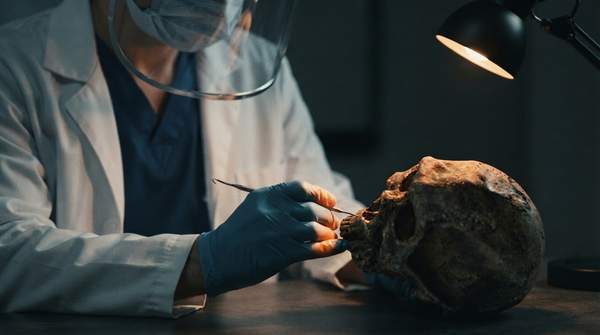
Ancient DNA is defined by Courtney Hofman and colleagues in their review of conservation archaeogenomics as DNA extracted from nonliving sources, a category that includes teeth, bones, toepads, desiccated tissue, seeds, plant remains, and paleofeces. These archaeological materials carry records of environmental and cultural change spanning millennia or more, which is precisely what makes them valuable to conservation biology: they allow researchers to reconstruct past environments and the place of humans within them.
A parallel and increasingly important source is environmental DNA, which Hofman's team describes as DNA obtained from environmental samples such as soil or water. When that DNA is ancient, researchers usually speak of sedimentary ancient DNA, or sedaDNA. Lake sediment cores are the workhorse of this tradition. As a review on forecasting ecosystem trajectories under climate change explains, sampling a lake sediment core yields DNA that can then be amplified, captured, or sequenced directly. Because lakes accumulate material continuously, a single core can hold a layered archive of everything from vascular plants to mammals that lived in the catchment over thousands of years.
The scope of these sources is broader than early assumptions suggested. A review of sedaDNA work in Australian coastal and marine contexts notes that the approach is not limited to reconstructing past ecosystems in cold climates, where preservation is famously good, but can also be effectively applied in sub-tropical and tropical settings. That expansion matters for conservationists working in biodiversity-rich tropical regions who might otherwise have assumed ancient DNA methods were off the table for their study systems.