
All Stories
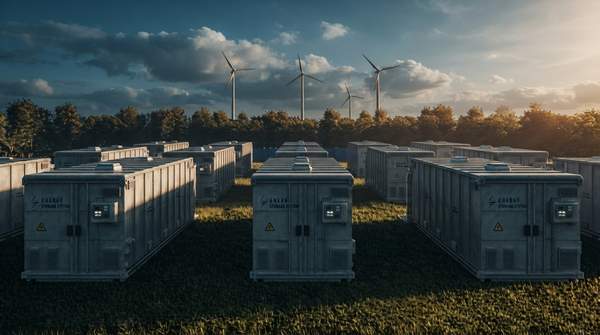
Lithium-ion vs. Flow Batteries: Which Grid-Scale Storage Technology Fits Which Job?
Lithium-ion batteries currently dominate grid-scale storage for short-duration, high-power needs due to their energy density and falling costs. Flow batteries are emerging as the leading candidate for long-duration storage, offering superior cycle life and scalability, though their costs are currently higher.
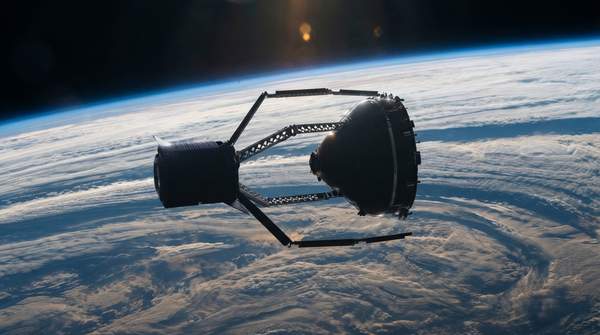
Three Ways to Clean Orbit: How Drag Sails, Lasers, and Robotic Capture Actually Differ
Space debris mitigation employs three distinct engineering philosophies: passive drag augmentation, contactless laser nudging, and active physical capture. The choice and development of these technologies are increasingly driven by the economic imperative to remove multiple objects per mission.

Local Impacts, Solutions, or Consensus: Choosing the Climate Message Your Audience Will Actually Hear
Effective climate communication requires tailoring messages to specific audiences using research-backed strategies like local impacts storytelling, solutions-focused messaging, or scientific consensus framing. The optimal approach depends on understanding your audience's characteristics and communication goals.

Glacier Cliffs Collapse Faster Than Models Predict — Then Stop Themselves
New research using over 15,000 satellite images shows that glacier cliffs can collapse faster than some models predict, but this process is self-limiting due to ice thickness, not a runaway scenario. This finding refines sea-level rise projections, making some higher-end estimates more plausible while ruling out extreme "doomsday" collapses.

5 Practical Ways Grounded Environmental Helps Property Developers Manage Soil Contamination
For property developers, transforming a brownfield site into a valuable asset presents both immense opportunity and significant risk. The challenge of managing soil contamination is a critical hurdle that requires expert…

Black Smokers, White Smokers, and Diffuse Vents: How to Tell the Deep Sea's Hydrothermal Vents Apart
Deep-sea hydrothermal vents are classified into three main types: black smokers, white smokers, and diffuse vents, distinguished by their temperature, plume color, and chimney structure. Understanding these differences helps identify the unique geological and chemical processes occurring on the seafloor.

From Super-Earths to Classification Codes: How Scientists Formally Sort Exoplanets
Common exoplanet labels are descriptive but imprecise; a new formal classification system by Plávalová & Rosaev uses four measurable parameters—mass, temperature, eccentricity, and density—to generate a compact code for systematic scientific analysis and habitability assessment.
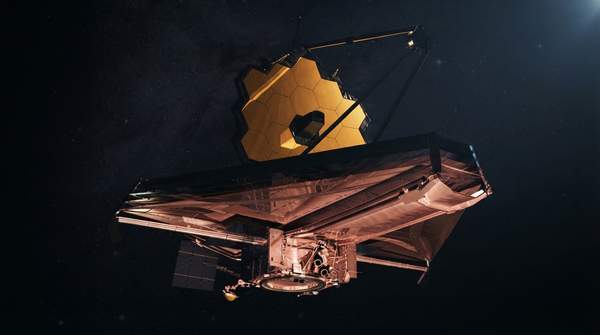
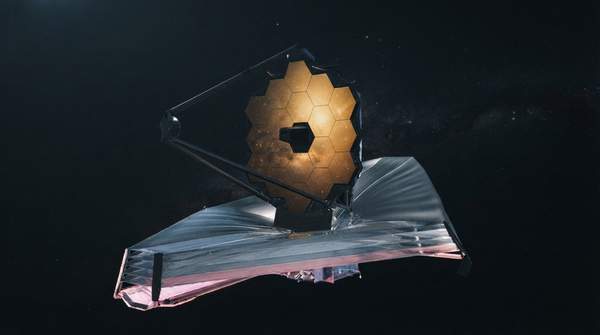
How JWST Reads Exoplanet Air: Transmission and Emission Spectroscopy Compared
The James Webb Space Telescope employs transmission and emission spectroscopy to analyze exoplanet atmospheres, revealing their composition, temperature, and weather patterns. These complementary techniques are crucial for understanding alien worlds and advancing the search for life beyond Earth.

Three Jobs of Light: How Deep-Sea Organisms Use Bioluminescence to Survive
Deep-sea organisms utilize bioluminescence for survival, employing it for predator avoidance, prey attraction, and communication. This light production, driven by a conserved chemical reaction, has evolved independently multiple times, offering diverse strategies for life in the dark.

How MSSPs Can Use Lunar Across Multiple Client Domains
MSSPs face challenges monitoring security across multiple client domains, particularly with credential exposure. Lunar helps by providing a domain-level view of leaked credentials and session data, enabling efficient review and concrete discussions with clients.

AFM vs. STED vs. Light-Sheet: Choosing the Right Microscope for Your Biological Experiment
The choice between Atomic Force Microscopy (AFM), STED, and light-sheet microscopy hinges on whether your experiment requires measuring physical surfaces and mechanics or visualizing fluorescently labeled molecules. Each technique presents unique trade-offs in resolution, sample preparation, and live-cell suitability, guiding the selection based on specific biological questions.

Rebooting the Aging Cell: How Scientists Are Testing Whether Epigenetic Information Can Be Restored
Scientists are exploring the idea that aging results from a loss of epigenetic information, which can potentially be restored. Two primary strategies, genetic reprogramming using specific genes and chemical reprogramming with small molecules, are being tested in labs and early human trials to reverse cellular age.
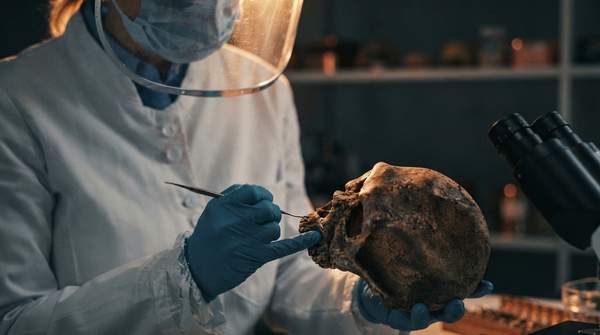
How Ancient DNA Put a Number on the Anglo-Saxon Migration
Ancient DNA analysis has provided a quantitative figure for the Anglo-Saxon migration to Britain, estimating that present-day English populations derive about a third of their ancestry from these migrants, transforming long-standing debates into empirically answerable questions.

From Variant Calling to Drug Discovery: How AI Is Reshaping Genomics Research
Artificial intelligence is fundamentally reshaping genomics research by enabling the analysis of massive sequencing data volumes, accelerating drug discovery, and advancing personalized medicine. Machine learning tools are essential for extracting meaningful insights from exabyte-scale datasets, transforming everything from variant calling to clinical decision-making.

Why the Non-Invasive Tech Trend Makes Pillowsonic Symphony a Smart Wellness Purchase
The article highlights the growing trend of non-invasive sleep technology, positioning Pillowsonic Symphony as a smart wellness purchase due to its comfort and effectiveness in providing sound therapy for better sleep, without the drawbacks of traditional wearables. It caters to the increasing demand for solutions that address widespread sleep disorders.

Genetic Secrets of 194-Year-Old Tortoise Jonathan Reveal Clues to Longevity
A genetic analysis of Jonathan, the world's oldest land animal, reveals a unique biological strategy behind his extreme longevity. Researchers found specialized gene variants for cellular repair and stable epigenetic control preserving youthful gene expression, offering clues to aging.

How Superposition and Entanglement Give Qubits Their Exponential Edge Over Classical Bits
Quantum computers derive their power from superposition, allowing qubits to exist in multiple states simultaneously, and entanglement, which binds qubits into a single interdependent system. Together, these principles enable n qubits to occupy a superposition of 2^n states, providing an exponential computational advantage over classical bits.

Three Ways Satellite Megaconstellations Disrupt Astronomy — and the Fixes Being Built for Each One
Satellite megaconstellations interfere with astronomy through optical, radio, and infrared channels, posing a growing challenge to observations. A multi-faceted response is underway, involving satellite engineering, observatory operations, and international policy coordination to mitigate these disruptions.
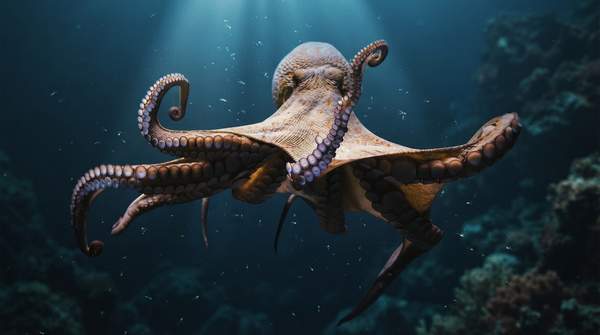
Ancient Genetic Shake-Up Offers New Clue to Octopus Intelligence
New research proposes that a major, ancient reorganization of the octopus genome, driven by 'jumping genes' and changes in DNA's 3D architecture, is a key factor in the evolution of their extraordinary intelligence. This genomic shake-up may offer a shared evolutionary mechanism with humans for developing complex cognition.

Where Quantum Computing Actually Helps in Drug Discovery—and How to Tell If Your Problem Qualifies
Quantum computing is a specialized tool for computationally intractable pre-clinical drug discovery problems, with near-term value found in hybrid quantum-classical approaches for molecular simulation and protein folding. Evaluating its applicability requires identifying classical bottlenecks, matching them with specific quantum algorithms, and assessing feasibility within current hardware constraints.
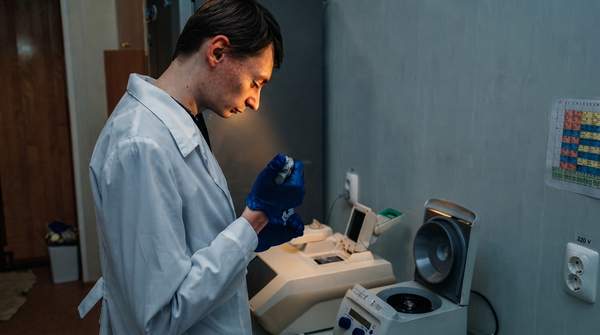
Choosing Your Method: A Researcher's Guide to 16S rRNA vs. Metagenomic Sequencing
This guide helps researchers choose between 16S rRNA gene sequencing and metagenomic sequencing for microbiome studies. It details their differences in taxonomic resolution, functional insight, cost, and complexity to inform method selection.

A Systematic Framework for Evaluating AI Tools in Education
Educators need a systematic framework to evaluate AI tools, ensuring they align with pedagogical goals, uphold ethical standards, and preserve educator judgment. This guide offers a multi-dimensional checklist to make informed, responsible decisions on AI adoption in education.
Webb Telescope Reveals Star Formation Stages in New ‘Cosmic Cauldron’ Image
The James Webb Space Telescope has captured a detailed image of the NGC 7129 stellar nursery, revealing multiple stages of star formation simultaneously. Webb's infrared vision pierces through dust to show protostars and young stars actively shaping their cosmic environment.
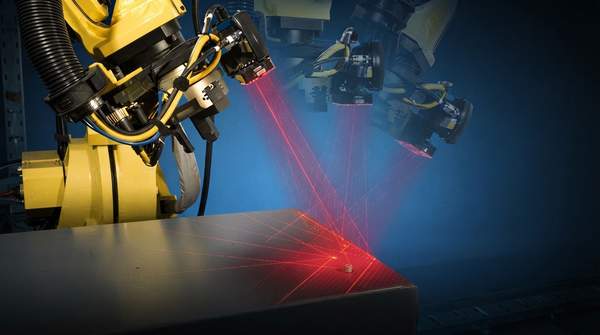
Direct vs. Indirect Time-of-Flight: Choosing the Right 3D Sensor
Time-of-Flight (ToF) 3D sensing technologies, Direct (dToF) and Indirect (iToF), differ fundamentally in how they measure light travel time. dToF uses precise pulse timing for long range and outdoor robustness, while iToF employs phase shift for high resolution in shorter-range applications.