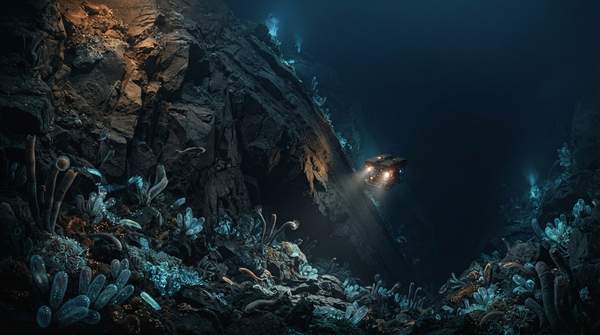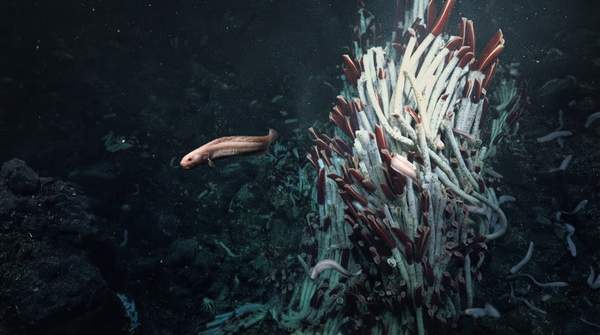
Choosing how to collect a sample from the deep sea is one of the most consequential decisions in a research cruise, and the right answer depends almost entirely on what you are trying to capture. Remotely operated vehicles (ROVs) offer visually guided precision for fragile biological and geological targets; in-situ pumps filter large volumes of water at depth for environmental DNA (eDNA) work; and physical grab samplers recover bulk seafloor material quickly and economically. Each approach preserves sample integrity differently, and each fails in ways the others do not. Here is how the three methods compare, and how to match one to your objective.
ROV-Deployed Tools: Precision and Versatility
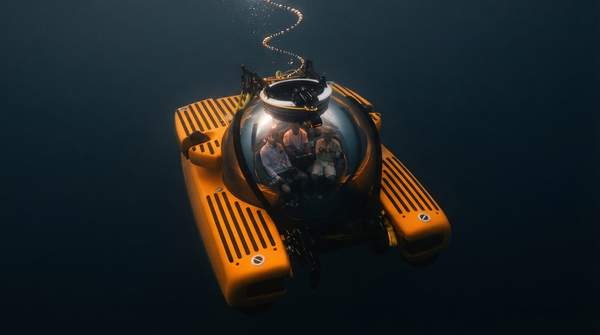
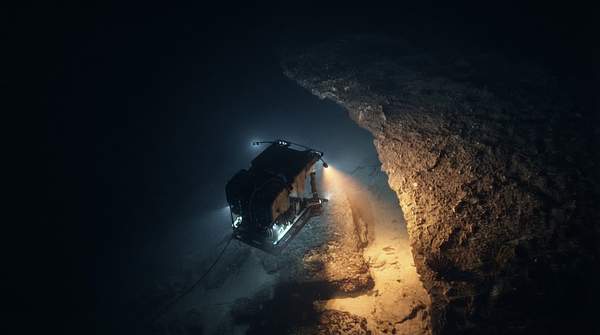
Sampling from an ROV is, at its core, a deliberate act of selection. Aboard the E/V Nautilus, the Ocean Exploration Trust describes the process as "a thoughtful and methodical process," with a team of scientists—both onboard and participating from shore—deciding when and where to collect biological, geological, and water samples. Each sample is gathered using precision tools on the ROV Hercules, an approach the organization credits with "ensuring minimal impact on the species and habitats we encounter."
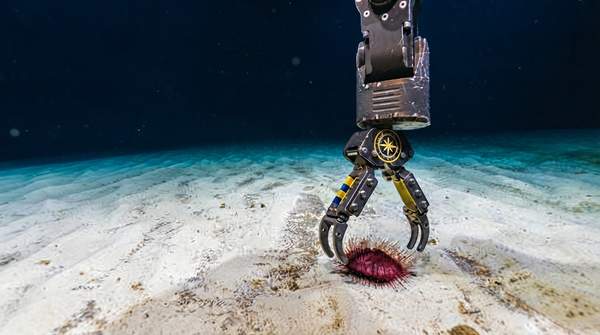
The most basic technique is a "grab" performed with the vehicle's manipulator arms, which end in two-fingered jaws used for gripping. According to the Ocean Exploration Trust, the jaws may be oriented parallel or intermeshing, offset from each other, depending on how the vehicle is configured before a dive. That detail matters more than it might seem: the configuration is chosen in anticipation of the dive's targets, reflecting how tightly the sampling method is coupled to the research plan.
The same account emphasizes that a wide variety of samples are collected, "requiring different methods depending on the size and fragility of the sample." This is the ROV's defining strength. Because a human pilot watches the seafloor in real time and directs a mechanical arm toward a specific rock, sponge, or coral fragment, the vehicle achieves a selectivity that blind, cable-dropped instruments cannot. The trade-off is that this precision is bounded by visibility conditions and the dexterity of the manipulator arms—an operator working through murky water with two-fingered jaws cannot match the fine-scale control of a gloved hand in shallow water.
For researchers, the practical implication is straightforward: when your objective depends on knowing exactly where a specimen came from, or on keeping a fragile organism intact, visual guidance and targeted manipulation are the capabilities to prioritize. The specific mechanism of integrity preservation, however, depends on the tool used and the operator's skill; an ROV is a platform, not a single method.
In-Situ Pumps: Specialized for Water and eDNA
Where ROVs excel at picking things up, in-situ pumps excel at filtering things out. Their domain is the water column, and their scientific payoff is environmental DNA. A study published in Scientific Reports, led by Miriam Brandt and colleagues, frames eDNA metabarcoding as "an increasingly used tool for non-invasive and rapid biodiversity surveys and impact assessments," detecting target organisms through DNA extracted directly from water samples.
The Brandt team's work illustrates both the power and the limits of pump-based sampling. During the EssNaut16 expedition, they collected water at most one meter above the seafloor using a newly developed in-situ pump called SALSA—a McLane WTS-LV sampler adapted by Ifremer in Brest, France, to allow replicated sampling. SALSA carries a rosette of five 2.8-liter sampling bowls mounted beneath a rotator plate, which aligns each bowl with the water intake in a pre-programmed sequence. That design enables targeted, repeated collection from specific depths—precise within the water column, though not at the scale of fine benthic features.
The same study is candid about a structural limitation. Because in-situ filtration is "inherently limited by mesh size in order to filter large volumes of water," the SALSA system—improved to pump through a 5-µm nylon mesh—detects only a fraction of microbial diversity, mostly larger planktonic groups or taxa fixed on larger faunal specimens or mineral particles. Large volumes favor metazoan diversity assessment; fine meshes favor microbes; the two goals pull against each other.
A broader review of marine water sampling techniques by Ying Wang and colleagues in Frontiers in Marine Science identifies the design principles behind this method class: in-situ acquisition, holding-pressure techniques, and low-contamination, low-disturbance techniques for sample integrity, alongside flexibility across depths and locations, timeliness over long deployment periods, and diversity of sample types. In-situ pumps score well on contamination control and temporal monitoring, but they cannot collect solid geological or macrofaunal samples at all—and their output requires specialized laboratory analysis after collection.
Choosing Your Deep-Sea Sampling Method
Physical grab samplers, such as the Van Veen grab, occupy the third position in this comparison. Dropped from a vessel on a cable, they recover bulk sediment and its resident infauna in a single closure, without visual guidance. Their appeal is logistical: compared with intensive seafloor imaging campaigns, grab samplers are generally cost-effective and less time-consuming for assessing deep-sea benthic communities. The price is selectivity—you learn what the jaws happened to close on, not what a scientist chose.
Setting the three methods side by side reveals the pattern: precision, integrity, and throughput trade off against one another, and no single tool wins on all dimensions.
| Methodology | Primary Sample Type | Sample Integrity Preservation | Selectivity & Precision | Typical Use Case |
|---|---|---|---|---|
| ROV-deployed tools (manipulator-arm grabs) | Biological and geological specimens of varying size and fragility | Targeted, low-impact collection; mechanism depends on the specific tool and operator skill | High—direct visual guidance and manipulator arms; limited by visibility and arm dexterity | Collecting specific fragile organisms or rocks where provenance and condition matter |
| In-situ pumps (e.g., SALSA) | Water for eDNA; not solid geological or macrofaunal samples | Processing water at depth minimizes contamination; integrity applies to water and eDNA, not physical structure | Precise within the water column at chosen depths; not fine-scale benthic features | Non-invasive, rapid biodiversity surveys and impact assessments via eDNA metabarcoding |
| Physical grab samplers (e.g., Van Veen grab) | Bulk sediment and infauna | Bulk recovery without targeted handling; disturbance inherent to jaw closure | Low—no visual guidance; samples whatever the jaws enclose | Cost-effective, time-efficient benthic community assessment |
Reading the table as a decision tool works in one direction: start with your sample type, then check integrity and precision. If you need a specific fragile specimen with known provenance, the ROV's visual guidance is the only route supported here. If you need biodiversity from the water column, an in-situ pump's depth-targeted, replicated filtration fits—accepting the mesh-size constraint on microbial detection. If you need sediment community data quickly and cheaply, a grab sampler delivers, at the cost of selectivity.
Two caveats bound this comparison. It covers three representative methods, not the full inventory of deep-sea technology, and it excludes post-collection processing: the Brandt team's samples, for instance, were shipped on dry ice to a laboratory, and eDNA results depend entirely on that downstream analysis. Cost figures are deliberately omitted, since expedition expenses vary widely; the logistical trade-offs, however, are consistent—ROV operations demand the most infrastructure, pumps demand specialized lab work, and grabs demand the least of both.
Selecting the Right Tool for Deep-Sea Discovery
Researchers should select a deep-sea sampling method by carefully matching their specific research objective, required sample type—microbial, geological, or faunal—and integrity preservation needs with the distinct capabilities of ROV-deployed tools, in-situ pumps, or physical grab samplers. The three methods are complements, not competitors: a single cruise studying a seafloor site could legitimately use all three, each answering a question the others cannot.
The measurable indicator of a sound choice is a research proposal clearly justifying the chosen sampling method based on its suitability for the target sample type and integrity requirements. If your proposal can state which of the three capabilities—visual precision, contamination-controlled water filtration, or bulk sediment recovery—your science depends on, and can name the limitation you are accepting in exchange, the method selection is doing its job.